


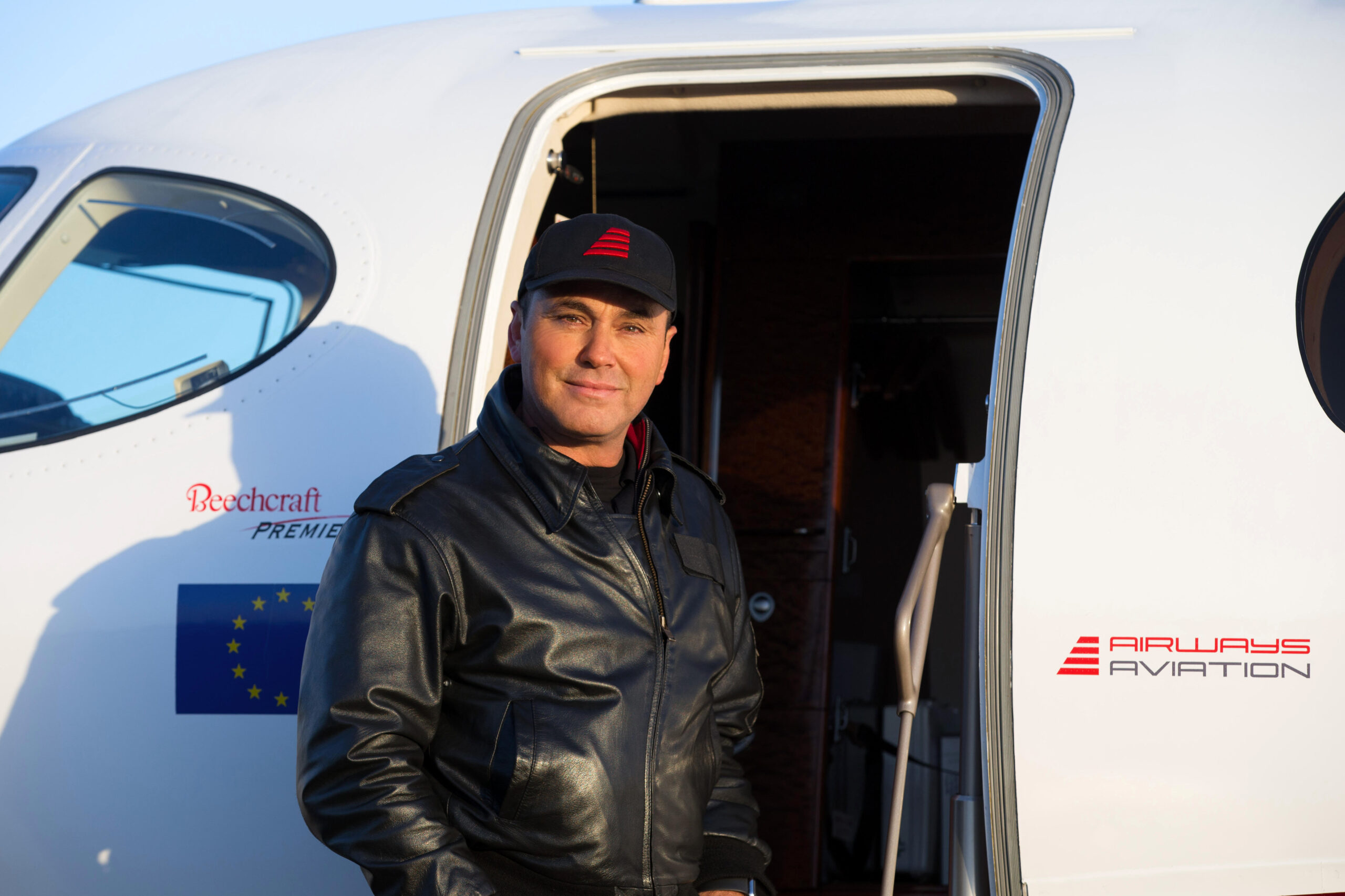
Introduction:
Romy Hawatt is the Founder and Chairman of the Airways Aviation ESMA Group – the world’s largest privately owned group of Multidisciplinary Aviation Academies. He spoke with Ewos IRORO, Editor, Travel & Business News based in Lagos, Nigeria on his Group’s strategic plan for Africa at the 54th Annual General Assembly (AGA) of the African Airlines Association (AFRAA) held in Dakar, Senegal on December 11 – 13, 2022.
Q: As one of the leading global aviation training service providers, could you please tell us about yourself, a brief about your organization, your plans for Africa looking into the future, and why you are here at AFRAA?
My name is Romy Hawatt and I am the Founder and Chairman of Airways Aviation ESMA Group of multidisciplinary aviation academies. We train airline pilots, military pilots, cabin crew, aircraft engineers, ground handlers and the like.
We also have the largest global training area footprint of any privately owned aviation training organization operating from ten locations internationally and so are both multidisciplinary and multinational in many respects.
Our academies, schools and training locations include Montpellier, France (in partnership and cooperation with Montpellier Business School); Bremen, Germany (in partnership and cooperation with CAE Defence & Security); Istanbul and Samsun, Turkey (in partnership and cooperation with Halic University); Beirut, Lebanon, (in partnership and cooperation with University of Balamand); Dubai, UAE (in partnership and cooperation with Dynamic Advanced Training); Delhi, India, and the Gold Coast & Lismore, Australia (in partnership and cooperation with the University of Southern Queensland, Southern Cross University & Griffith University, TAFE Queensland and TAFE NSW and so, we are set and are expanding to deliver high-end aviation training from tertiary through to Bachelor’s Degree to EASA, CASA, ICAO and European and Australian standards to up and coming professionals across the world.
Q: Now I’ve seen that you’ve got centres virtually all around the world, but the African continent, you really didn’t mention a particular centre in Africa. What’s your plan looking at Africa?
We’ve had our eye on African aviation for years, but only in recent times have we seen the most serious signs yet that the African market is ready to lift the game and come of age. There are also emerging signs that many of the African Governments and their respective Airlines are ready to take those next steps (or even quantum leaps) into their respective aviation futures. In the past, there were lots of false starts in dealings within the aviation sector around Africa but we now are finding times are changing and that the time is increasingly right, to take our own strategic leap and start the process of positioning ourselves to have our education & training presence on the African continent from early 2023.
Q: So what regions are you looking at in placing your office in Africa? What countries are you focused on?
Our aim is to be as pan-African as practicable and we have taken the first step by announcing here at the AFRAA Congress in Senegal that we will commence teaching our Airline Pilot Foundation Course (as part of our EASA Airline Pilot Pathway Program) for Airlines and self-funded students in Dakar, from February 2023.
Importantly, we are also simultaneously gearing up to deliver our EASA Cabin Crew Course from April and will provide two options for training. Students will have a choice of either having both their theory & practical Cabin Crew training delivered locally or have the theory delivered locally and the practical training conducted in Dubai in conjunction with our renowned industry partner ‘Dynamic Advanced Training’, where students can expect nothing short of a world class training experience.
In summary, both current and future demands are projected to remain high to very high and we are therefore seeking cooperation with the right strategic partners in various African countries, territories and regions. We have committed to start in Dakar and plan to roll out to where we are seeing demand increasing and at this stage, that includes much of West and Central Africa, with Ivory Coast, Ghana, Cameroon and Nigeria – being the biggest economy in Africa – showing good signs.
Q: I’m glad you talked about the Nigerian economy being basically the largest and so on and so forth. And so I’ll like to imagine that going forward, probably in the near future, you might be considering also, making an entry into the Nigerian market. What will your strategy be actually? And I know you talked about pilots, cabin crew; but what other areas do you provide training please?
Nigeria, like other countries, is about the local demand (which remains high) as well as finding the right strategic partner. We must think globally, act locally and locate the partner that is not only conscious of the current demands & standards but is also driven by lifting the game in Nigeria specifically and Africa generally.
We plan to deliver the same slate of courses in Nigeria as other locations and so you’ll find initially, Airline Pilot Foundation Courses, Cabin Crew Training and then progressively we would add Ground Handling, Aircraft Maintenance & Engineering and other aviation related courses.
Q: At AFRAA you have basically all the African airlines that are here. I understand, yes, you’re launching with Senegal. But while you’ve been at AFRAA, what contacts have you made to see that the African continent actually comes under your fold, so to say?
We have been progressively getting around and speaking to the different African airlines, various CEOs and other representatives; looking to tune into what their issues are; what challenges they are facing and looking to see how we can assist them in terms of what we provide.
There are gaps everywhere in African aviation, especially if you look at the demands that will be placed upon future recruitment and training activities given the already chronic shortage of pilots, cabin crew, engineers and technicians across the whole of Africa.
Some nations are doing better than others in gearing up but generally as a whole, the ‘Boeing Pilot and Technician Outlook’ suggests that there’ll be a short fall of about 20,000 pilots, 26,000 cabin crew and 21,000 technicians in Africa alone over the coming decades.
Many young people do not even realize that they can establish a career in aviation and so for us, it’s also an education process in terms of letting the populous know that a whole new career opportunity exists for them in the aviation industry. It is also about interfacing with the industry and the government in terms of really getting down the idea of how important the aviation sector is to the benefit and growth of their economies. Whether business travel, tourism, cargo and the military, there are so many layers and levels of importance in establishing a sound aviation base in each country.
I believe it is also critical to emphasize the importance of Governments taking a lead and making that investment in the frontend and thus creating the right environment for direct foreign investment from the private sectors both inside and outside the respective countries. If they can get the policies and formulas right, the benefits short, medium and long term to their societies, their communities and their economies are immense.
Q: You must have at least looked at some of the challenges of coming into Africa and operating in Africa. What are some of those challenges that you have actually foreseen and how do you hope to get around them?
I think professionalism, systems and processes being systematic and process-driven is extremely important. Aviation is a very disciplined industry and highly regulated for very good reason. Safety will always be a priority issue and I know change is always hard to implement with the old guard. For our part, we are very much focused on the up and coming generations as we know the future of this continent via each of these wonderful countries across Africa will rely heavily on the way their youth is brought up, educated and nurtured into the future. For us, amongst other things, it is about rigor and establishing a sense of pride, quality & excellence in the youth. I often repeat that education & training is a pathway to poverty alleviation and self-determination and so if we can properly train & educate the youth, they will quickly become self-sustaining and net positive contributors to the future development of Africa and the world at large; and so this is where our collective focus has to be.