


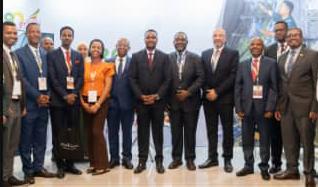
The African Airlines Association (AFRAA), alongside Ethiopian MRO, EgyptAir Maintenance & Engineering, Kenya Airways MRO, and South African Airways Technical, concluded the inaugural African MRO Conference in Addis Ababa on 31 March 2026, with stakeholders issuing an appeal for pan-African cooperation, regulatory alignment, and accelerated digitalization to curb capital flight and bolster regional maintenance capacity.
The conference, which hoped to translate policy dialogue into concrete deliverables tied to continental aviation objectives was convened by Ethiopian Airlines (ET) at the Ethiopian Skylight Hotel from 29–31 March 2026.
Themed, “Building Africa’s Sustainable MRO Ecosystem”, the three-day summit attracted more than 450 participants representing over 50 nations, and stood out as a pivotal forum for constructing a competitive, self-reliant Maintenance, Repair and Overhaul (MRO) ecosystem on the continent.
Delegates reached a firm consensus on the imperative to localize MRO expenditure, noting that persistent reliance on extra-continental facilities continues to inflate operator expenditures and extend aircraft-on-ground (AOG) intervals. Industry players stressed the need to expand indigenous capabilities to anchor billions of dollars in annual maintenance outlays within Africa, while simultaneously enhancing fleet utilization rates and dispatch reliability.
To operationalize that goal, carriers, MRO organizations, Original Equipment Manufacturers (OEMs), and Civil Aviation Authorities (CAAs) committed to deepened collaboration through joint ventures, shared hangar and back-shop capacity, as well as pooled spares provisioning for smaller operators. Participants further advocated reinforced partnerships with continental institutions and regulators, underscoring that collective action is essential to scale the sector.
A principal impediment to trans-border maintenance activity was noted to be lack of harmonized activity between regulatory bodies on the continent. For this reason, the conference called for mutual acceptance of airworthiness approvals among African states, greater convergence of technical standards, and intensified coordination through continental bodies. Strengthened operator-MRO partnerships were also identified as critical to realizing expedited turnaround times, reduced cost structures, and improved global competitiveness for African service providers.
On the technology front, the forum highlighted predictive maintenance, artificial intelligence, and big data analytics as transformative levers for MRO optimization. Recommendations included investment in digital architecture and data platforms, enhanced data-access collaboration among airlines, OEMs, and MROs, and the development of internal competencies to transition to predictive models. The establishment of a governance framework for data sharing was also suggested. Delegates observed that when properly implemented, digital solutions could yield double-digit improvements in cost efficiency and aircraft availability.
Addressing workforce constraints, the conference flagged skill deficits and technician attrition as systemic risks. Proposed mitigations include expanding aeronautical training institutions, synchronizing syllabi with evolving industry requirements, forging stronger alliances between MROs and academia, and engendering compelling career trajectories for emerging African talent. Human capital was designated “the foundation of a sustainable MRO ecosystem.”
Supply chain fragility, said to manifest in component scarcity, logistical bottlenecks, and global disruption exposure, was cited as another operational choke point. Stakeholders agreed to advance regional distribution hubs, foster collaborative procurement strategies among airlines, and deploy digital tools for inventory optimization and demand projection.
The AFRAA B2B Marketplace at the event functioned as a commercial engine room during the conference, staging pre-scheduled engagements that allowed operators, MROs, OEMs, and vendors to explore maintenance alliances, negotiate service level agreements, and pinpoint cost-containment strategies.