

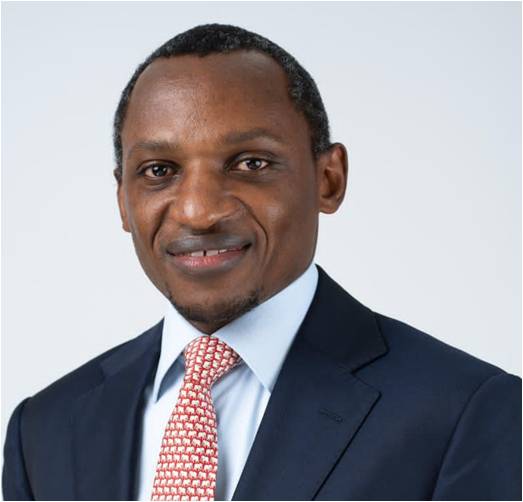
Mr. Julius THAIRU is the Chief Commercial Customer Officer of Kenya Airways based in Nairobi, Kenya. He recently visited Nigeria on a market assessment and industry engagement tour. Below are excerpts of an interview he granted to journalists during his visit as compiled by Mr. Ewos IRORO, Editor, Travel & Business News.
Q: Could you please give us an insight into your career and the reason for your visit to Nigeria?
I am Julius Thairu. I’m the Chief Commercial Customer Officer with Kenya Airways. I’m based in Nairobi, Kenya. I’m really very passionate about the aviation industry. I’ve been in the aviation industry now for about 24 years. I joined Kenya Airways in 2001. I’ve worked in different continents. I think half of my time at Kenya Airways I’ve worked outside Kenya. And for me I have a passion for aviation because of the impact it has. Aviation touches everyone. It’s about experiences. We fulfill experiences.
Nigeria is an important market for Kenya Airways. It’s actually the second biggest market in Africa, and actually should be the biggest, but it’s the second biggest after South Africa. I’m here to first of all meet the team who continue to do a very good job in this market and to support them. I’m also here to meet our customers. Our business thrives with being close to our customers, so I am here to hear from our customers how we’re doing and what are the things we need to improve. Also I’m here to meet our partners, whether that is trade partners, companies, businesses we work with, banks that we work with, especially to help with repatriation.
Kenya Airways is one of the big airlines in Africa. We’ve been in existence since 1977. We’ve been flying to Lagos since 1998 and we pride ourselves as an airline that puts Africa first and connects Africa. Our mission is to propel and to drive prosperity in Africa by connecting people, cultures and market. We see that Africa is growing, but there’s a big gap in Africa when it comes to connectivity. And as we know air connectivity is what spurs trade, tourism and ultimately the economic progress that we need in Africa. So we pride ourselves as being one of the airlines in Africa that are doing that.
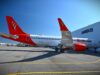
So, we’re increasing the frequencies that we fly to Lagos from daily flights (7 weekly frequencies) to 10. And in future, we’re hoping to actually increase those to two flights a day (double daily) so that you can really have good connectivity. We are also strongly considering opening up a new city in Nigeria. So we’re looking at Abuja probably sometime next year to really then increase that access into Kenya; into African countries and also beyond Africa.
So we’re also challenging ourselves and working with other stakeholder including tourism boards, hotels to figure out what do we need to do more to encourage also more Nigerians to come to Kenya. And I’m sure also probably Nigeria also as a country will be doing the same to attract more people to travel between our two countries.
Q: Earlier you said Nigeria is Kenya Airways’ second biggest market but that it should be the biggest. What are those factors or potentials you have seen to make you allude to this?
This is a question I’m very passionate with. And first, maybe just to give context to it and to state what maybe is my own version is, Nigeria is important for Africa, and Africa, in my view, will never prosper or move forward if Nigeria is not prosperous. You just need to look at history and go back to the Roman Empire or the Ottoman Empire; you always need a big economy around you to spark progress. You need a country with a big population, with an economic might. For me, what even makes Nigeria a hub; what convinces me about Nigeria is also if you look at the cultural impact it has on Africa. Most African countries can relate to the culture in Nigeria. And that’s why there’s a lot of influence, like in my own country, whether it’s fashion, music, or movies; you have young people who will speak Nigerian English, and it’s cool if you speak like that. And if you look at the influence the US has had in the Western world, it’s not always about money. It’s always about can you influence and drive culture? So for me, I see Nigeria as a country that must move forward. And you also represent the unique challenges we have in Africa. And I believe the solutions to those challenges must come from us; the African people. Nigeria is a big travel segment. Because if you go anywhere in the world you must find a Nigerian. So there are a lot of Nigerians who travel. It’s in your DNA. And we feel as an airline, we have not really gotten our fair share. And that’s the reason for my comment that Nigeria should be number one – because it’s the biggest travel market, even as it is today. We do not have enough capacity or enough flights into the market, and that’s why we’ve taken a decision to increase the flights. We don’t necessarily fly also the right product. Nigeria is a country of big things. That’s why going forward four to five of our flights will be on our 787 Dreamliner, which is a big aircraft and which is the right aircraft for this market. So those are some of the steps we’re taking. And also the fact that when it comes to even travel between Africa, I ask why is it that some Nigerians prefer to go to Dubai on holiday and not Kenya. What is it that I need to do in Kenya? Is it because we don’t have shopping experience? Maybe the government needs to figure out if you want Nigerians to come to Kenya to create attractive shopping experience when people come on holiday. So, there are things that we need to do as an airline but also with other stakeholders to make sure that we get Nigeria to number one.
Q: What is the drive behind Kenya Airways’ need for increased frequencies?
First of all, travel has completely rebound after a very painful period of COVID. Africa was actually the first continent to fully recover and go back to 2019 figures. In fact, Nigeria was number one in Africa. Your domestic market recovered because as soon as boarders opened, you couldn’t hold back Nigerians from traveling. It was business as usual! So first it is because of the strong growth that we see with travel. And especially, Africa continues to grow. In fact, I think the second highest rate of travel growth is in Africa. So we also want to capitalize on that opportunity. And also, as Africa economically moves up, more people are able to travel. So this is why we’re also increasing frequencies – to capitalize on that opportunity and growth. Abuja is a key important city in Nigeria. In fact, it’s a city we served in the past. So we will just be resuming flights that we stopped before. So it’s important, especially being the political heart in Nigeria, to connect Abuja. There are especially a lot of affluent travelers out of Abuja; it’s one route where filling up business class is normally not an issue for airlines, and we have a goal to fly to as many cities in Africa. We cannot fulfill that mandate without coming into Abuja. So, that’s part of our growth strategy and it aligns with what we see as growth in travel.
In fact, IATA’s projection is that by 2040 Africa air travel will have doubled from the current 150 million to more than 300 million. So we are taking advantage of that and I don’t even think we have enough capacity in Africa today. In fact if we look at arrivals into Kenya which we reported as a country, it grew by 23% compared to last year. So, more people are coming into Kenya. We take about 70% of the share of everybody coming to Kenya and that gives you an indication of the growth. So, if we don’t grow and put more capacity what will happen is customers are going to suffer. If you reduce supply and there’s demand, then it hurts the customer because price will go up. So part of the reason why we also put in more flights is to make travel still affordable.
Q: What is Kenya Airways’ strategy as regards cargo?
Cargo is also a key business for us. In fact we just added some cargo capacity. Beginning of this year we brought in two cargo freighters to complement the two that we had. So we’ve grown into four freighters. And I think again, some of the lessons from COVID to Africa was you know, we cannot be relying on outsiders to help bring the necessary supplies in Africa. We continue to see a lot of cargo opportunities. And so we also continue to grow our cargo business. I think still Africa has a lot of opportunities for cargo travel, but what we need to do more to spark a lot of cargo travel is to trade among each other. We really don’t do a lot of trade. If you look at Kenya and Nigeria, how much do we trade? What are those commodities that we need to trade more? For example, we do freighter services into Lagos twice a week and back. But we were not doing that before. We are doing that to take advantage of also the growing cargo demand.
Q: As regards connectivity, how committed is Kenya Airways to SAATM?
Kenya is a signatory of SAATM, and we fully support the whole idea of an open or borderless Africa as we call it. As of 1st January, our government took a bold decision to remove visa requirement for everyone. Initially we even said we first remove for Africa, but we’re saying remove visas for everyone. Just create a process using technology that allows you to know who has come into your country and who’s left, because that’s important for security reasons. But no visa requirement, and especially this thing of somebody taking time off to go to an embassy to go to a country, should not exist. Before coming here I had to do visa, and it takes like a whole day to go to an embassy. For me you know, complete waste of time, and I’m an African coming to do business in Nigeria, but I need to be taken through that. When others who don’t even always add value in our African continent, they just land and you just allow them in. So Kenya as a country, we’ve taken that position where we want to open up more in Africa. We need Africa to open up and trade more. So from policy we fully support SAATM. We’re actually a beneficiary of SAATM. There’re some destinations that we fly that could not be possible if it wasn’t for SAATM like our flight into Ghana also extends to Liberia, Sierra Leone. We extend also our Accra flights to Dakar with 5th freedom. We fly Lusaka-Harare, we fly Livingstone to Cape Town; Victoria Falls to Cape Town, Douala-Abidjan. So we have all these connectivity of flights within the African continent that are of course enabled by let’s say SAATM or by countries that are willing to open up. But we need to do more because still a lot of the countries in Africa are holding back. And especially countries that really don’t understand the bigger benefits of SAATM, and more look at it like as what impact will it have on my local airline. So that’s what I would say about SAATM. Maybe the other point I would want to add is also we need to drive more consolidation. We saw consolidation in air travel in the US when they reduced their many, many airlines to three big ones. Same thing happened in Europe – three big ones. China also did the same; because they realized with an airline, you need critical mass. So as Kenya Airways we’re actually championing that. We’ve been out together with South African Airways, and this are just, let’s say our first partner, to champion the whole vision of creating a pan-African airline.
Q: You spoke earlier about making visas free for everyone. But how do you balance relaxing visa restrictions with security?
I am not a security expert but my view is, especially when you look at today’s visa regime and visa requirements especially in Africa, it’s got nothing to do with security; it’s more political. The same way today if I want to get an American visa or Schengen visa, it is a whole process that is just designed to be paid for then discourage me from going. It has nothing to do with security. We already have enough technology today to do a lot of checks or to secure borders without making it painful for people travelling. And in fact I can maybe compare it with like an airport experience. When somebody is going through the airport and you actually see technology enhancements in some airports, you could frisk everyone and tell them to remove everything from their bags because you are very security conscious and ask many questions and make the process painful and so. You could also use technology, profiling because you have information about the person; you know this person travels every week, what do we do? You could also have smart technology like now the x-ray machines that many airports are installing where you don’t need to remove anything because I can see and I can zoom in and I can see what this is. So for me that’s what a lot of governments need to do. To secure your borders you don’t have to have these painful visa regimes. I am sure me, that is the Nigerian example, me going to the embassy and spending a day there and filling forms, which probably are not digitalized, I don’t think that is the way to go. I think especially the more we move to digital technology, the more governments just need to adopt first of all asking airlines to share pre-flight information or what they call PNR-API data. So if I have got a flight with a hundred people that I have already shared 3 – 5 days in advance that information, the government probably has a database and it just flags that information and already you’ve screened a few people who need secondary checks. And then use other stakeholders and airlines to do some of their primary checks when they are boarding people. If there was an issue about someone, already I should be informed in Nairobi before I am boarding you. To this I ask a certain secondary security question just to be sure; and if you pass then I can board you. So I think for me this whole visa thing is more political and we should use technology and biometrics. Today you know everything about someone.