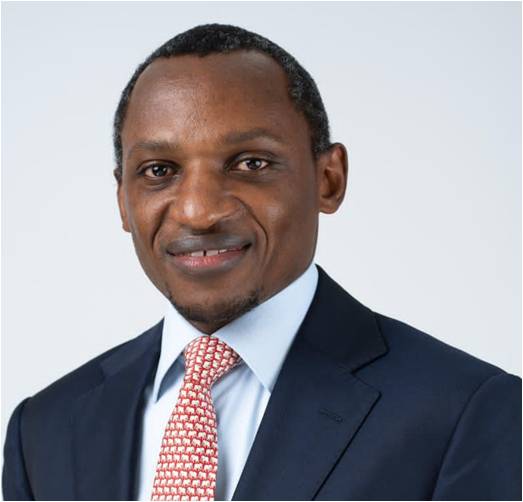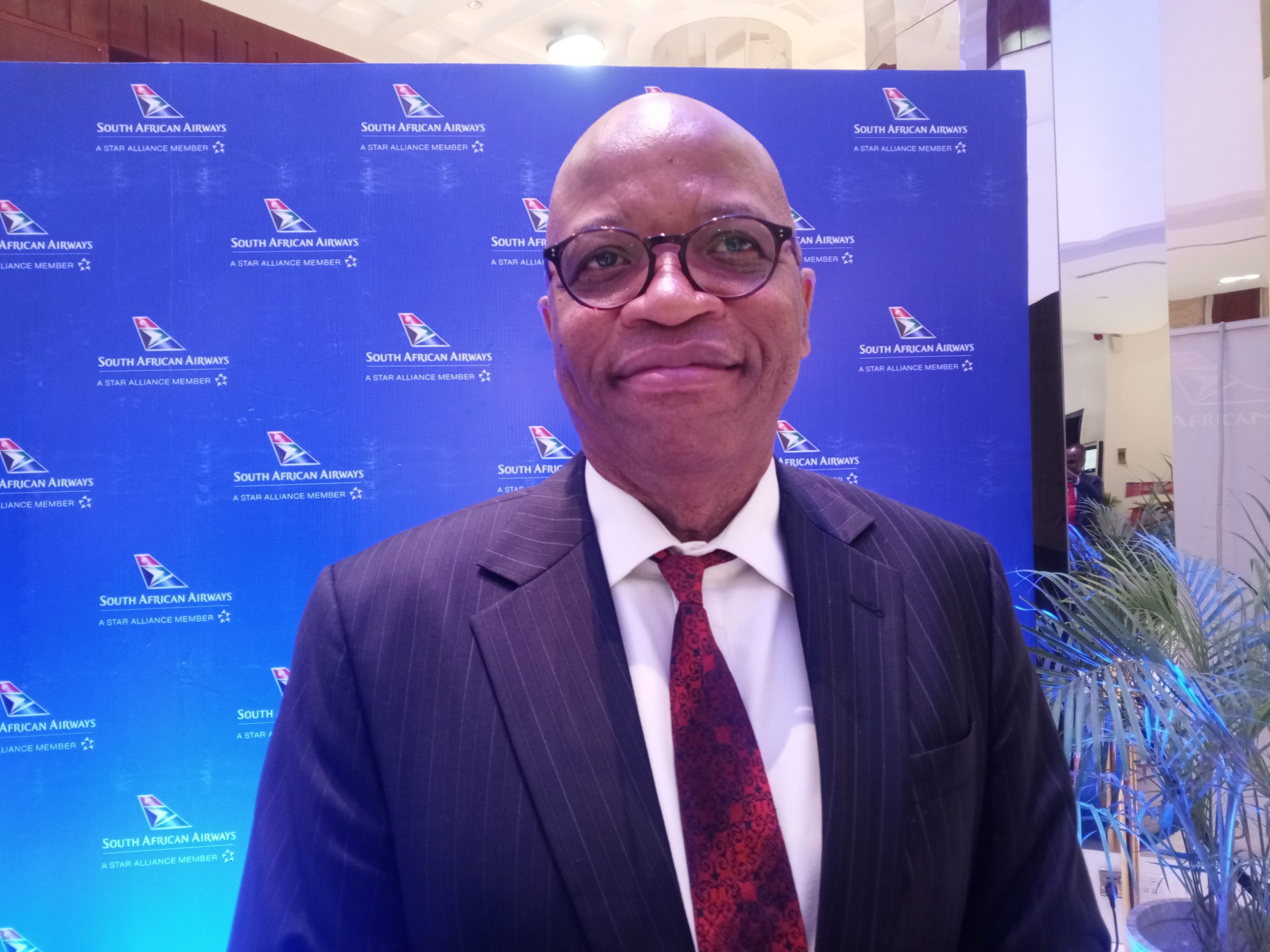


Mr. George Mawadri is the Regional Manager Africa of TAAG Angola Airlines. He recently spoke with Mr. Ewos IRORO in Lagos on the airline’s branding and marketing strategy to boost its visibility and performance in the Nigerian market and beyond Africa.
Q: Could you give a background of your experience in the industry?
I am George Mawadri and currently I am with TAAG as their Regional Manager for Africa. I have been in the aviation industry my entire life. I have managed British Airways for many years. I have worked in many different roles including being the Regional General Manager for East and Central Africa for British Airways. After that I also worked with an Abu Dhabi based airline called Etihad. It was at that point that I was asked to come to Nigeria to manage Etihad as the General Manager for Nigeria, but after a few months I was elevated to handle the region, which meant managing West and North Africa for Etihad.
By the time I left Etihad in January 2018, meaning I was leaving Nigeria as well, I had been posted to Nairobi and Abu Dhabi to handle Etihad as General Manager for Africa. After that, I decided to seek a different career, still within the aviation industry, but from a ground handling perspective. So I joined National Aviation Services as their Head of Commercial, and have been doing this for the last few years, until I joined TAAG again. This shows the passion I have for the airline industry. I have a passion for challenges and making those challenges work. That is where I get my satisfaction and motivation as well.
Q: What’s your goal in ensuring that TAAG has a more visible presence in the Nigerian market?
Brand and Market awareness is very important. I’ll start by saying that TAAG has a plan to be a very visible airline within the Nigerian market. However, as I mentioned, we started at a very turbulent time. Our first operation in Nigeria was in 2019, and you know what happened then which set us back quite a bit. So we had to suspend flights due to the COVID-19 pandemic.
Then we came back in 2021 and we’ve started operations again. We have a plan for TAAG in terms of brand and market awareness. We’ve started today with the trade forum we have had. We have plans to involve ourselves in Corporate Social Responsibility, and also to brand ourselves within Lagos and probably grow from there to Abuja, Port-Harcourt and Kano as well, one day hopefully. We plan on doing this systematically step by step as we move along.
Q: Having retuned into the market in October 2021 until now, at least you can now assess the market. Would you say this is a promising market in your view?
I will say definitely, there are prospects, and IATA has already released a lot of information about the comparisons between 2019 pre-COVID and post COVID. There has been quite some growth in terms of volumes and travel from an aviation perspective, which is outstanding, especially after COVID where we thought the Aviation industry was completely down. Passengers still want to travel whether it’s for business or leisure. And so we’re seeing prospects and increases in the numbers as we move along. If we compare our current performance or numbers with pre-COVID of 2019, we can see a lot of increase. And this seems to be happening from month to month, which is a very encouraging and motivating situation for us.
Q: When you look at the markets you’ve been to and the uniqueness of the Nigerian market, which markets would you say give you your highest numbers, and to which destinations out of Lagos?
Nigeria is a very important market for us in TAAG, specifically for my region, or the region of Africa where we operate in. We also operate to South Africa, which is another big market. Nigeria is also among the biggest markets that we operate to. Nigeria has always offered the volumes that you require in terms of filling up aircraft with the capacities that you have.
There’s quite a bit of demand, and that demand is not only for TAAG and the aviation industry, but also for most businesses. Nigeria always offers quite a bit of demand within the region and within actually the whole world. It’s one of the countries that will give you the demand that you require. So Nigeria is a very important market for us.
Q: Since you resumed operations having returned in 2021, what are the challenges you have experienced and how are you surmounting them?
One of the biggest challenges we’re having is trying to convince passengers that you can fly after COVID, and I think every airline has been having that problem. Getting that actual confidence that aviation and flying from one point to another for a face-to-face meeting is still important other than meeting via Zoom or by telephone. And in Africa where relationships are very important, we seem to see this coming back again.
The other challenge we’re facing within Nigeria specifically is the repatriation of funds. The foreign currency situation within the country is not making it any kind for the aviation industry. It becomes so difficult for us to manage to repatriate our funds from the market into our head offices. Which of course these funds are required to make the airline continue its operational processes.
The other challenge we are facing within the market is that Nigeria requires a lot of relationship building. Since COVID, we have had to start all over again with the trade, with the agents, with NANTA, trying to build these relationships with our trade partners who are the agents. And this is the beginning of rebuilding the relationships with the forum we have had because we know these are the people who are going to be our channel of selling. We don’t really sell directly to our customers. They are the ones who sell to our customers. We offer them the product and we support them to sell us.
So we have had challenges trying to revamp all this. It’s like all the work we had done previously kind of went down the drain during COVID and we have had to get them back up. We have had to re-train the staff as well. During the process, we have lost some good staff and in some other ways others decided to go to other industries because the aviation industry was not operational. And so we have had to retrain new staff to do things so they can gain the experience in order to sell.
Q: You spoke earlier about the issue of COVID. Are there certain health restrictions that your passengers out of Lagos need to be aware of?
Concerning health restrictions, fortunately for us, just about two (2) months ago, Angola removed all COVID restrictions. So you do not need a COVID certificate to travel to Angola. The second is the Yellow Fever certificate. This one has always been there. Even if you’re traveling to Johannesburg with TAAG, you’re going to need your Yellow Fever certificate. So the Yellow Fever certificate is still a requirement for TAAG. So it’s good for passengers to always have their Yellow Fever certificate.
Q: What about the issue of visas and how do you hope to increase the number of visitors to Angola?
We’ve had quite a number of issues about visas. And as you can see today we’ve clarified that there is the non-grant visa which is issued online, and which is almost like a guarantee for you to travel. However there is a process that you have to go through. You have to go online and get authorization that you’re able to travel. According to our team, it’s very easy to do. You need to just go in, get that authorization and you keep that authorization. And then you can travel to Angola and you present it, and you will have no problems.
Q: Are you looking to have some campaigns and road shows to raise awareness in order to make TAAG more visible and grow the market?
We have a sales and marketing plan for every market that we operate in and Nigeria is not an exception. And we are going to build on these market plans from now to see what works and what has not worked and then build more on what is working for a particular market. This year, we want to test different things that we’re doing in terms of marketing, branding and sales. We’re going to build on that by the end of the year so that we have a plan for next year before the year starts; and for us to follow that plan; whether it’s interaction with the trade, or interaction with corporates, interaction with government agencies, interaction with the chambers of commerce and embassies. How do we interact with the Latin Americans or the South Americans or the Portuguese, Spanish or South Africans within the Nigerian market? How can we penetrate that market? So we are really working on plans to do that as well.
Q: You talked about your fleet saying that you’re expecting six (6) A320s. When these aircraft come in, how do you hope to deploy them?
Right now we have a fleet, but the fleet is being stretched. And we are expecting to get six (6) A320s. But you know these days things happen, because after COVID, there are so many airlines that got orders with Airbus and even with Boeing. And these orders are being released slowly from the manufacturers. So we expect to bring in these aircraft to complement what we already have. What we already have is under tremendous pressure at the moment with the routes that we have to fly to. And these aircraft will be a very big welcome for us in order to become an airline that operates on-time without disappointing our customers and without having delays or disruptions so that we can gain more confidence with our customers.
Q: What is your message for the Nigerian market?
My message to the Nigerian market is watch TAAG. TAAG Angola Airlines is coming into this market and we are going to make a mark; not only for Nigeria but there is a mark that is going to be for Africa and globally. We have gotten into codeshares with Iberia in Europe which opens up many destinations in Europe for us. And then we have also got a new codeshare with Gol, which is now opening up other than Havana and Sao Polo where we fly, it’s opening up the whole of South America. And then we also have potential new routes that we’re looking at within Africa and we are going to be announcing them very soon as well. So TAAG has come to stay and we really thank Nigerians for supporting us.